
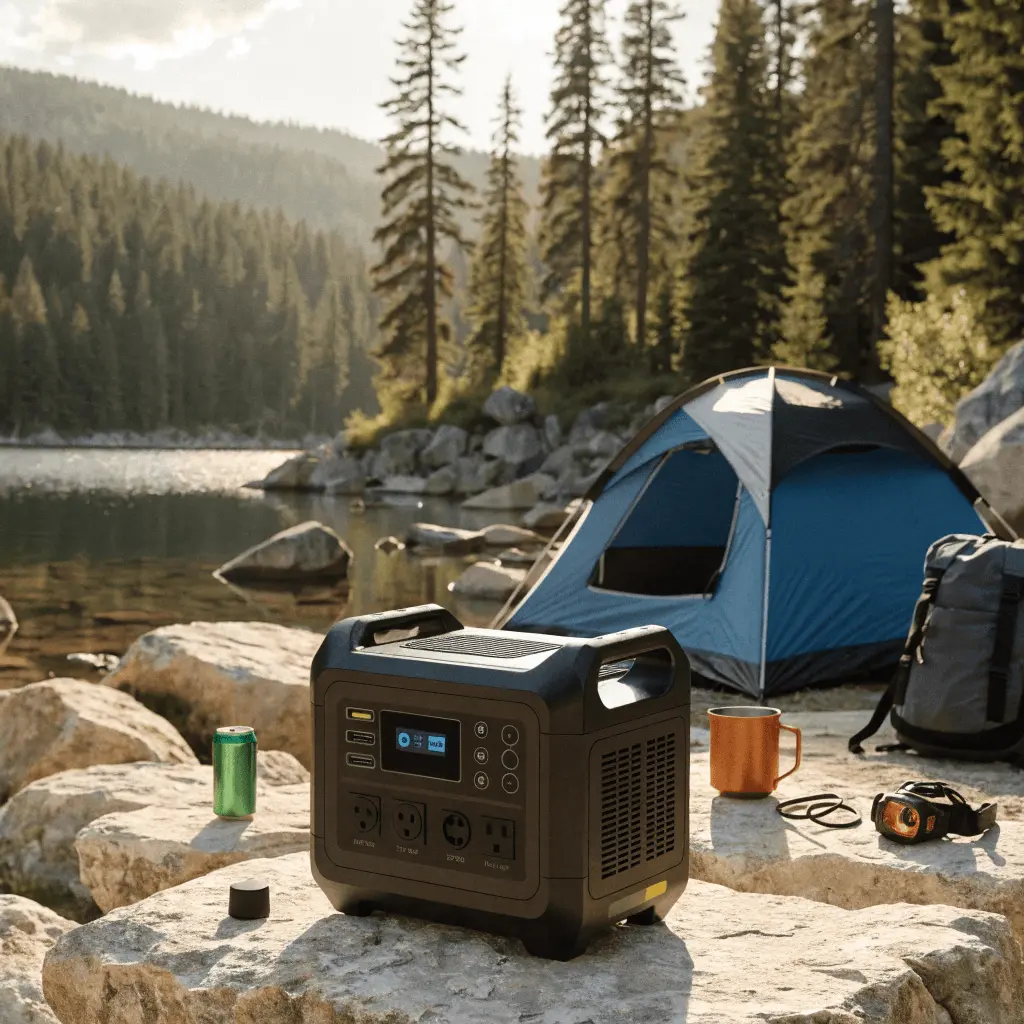
Weekend campers don’t need a spec sheet. They need a box that charges fast, runs the cooler, and doesn’t tap out Saturday night.
EcoFlow and Jackery show up on nearly every camper’s shortlist. Both make solid gear. They solve the weekend-trip problem in very different ways.
This guide compares the two brands where it matters most for a Friday-to-Sunday trip: runtime, recharge, weight, and what tends to fail first.
Short Answer Before We Dig In
Most two-night trips call for a portable power station in the 1,000Wh class. That range covers a 12V cooler, phones, lights, and a small fan. Smaller feels tight. Bigger adds dead weight to the trunk.
Who This Is For
Car campers, tent families, and light overlanders. If you need whole-home backup or an RV generator replacement, look at the DELTA Pro class instead. These 1kWh units sit below your real tier.
What We’re Comparing
We’re using EcoFlow DELTA 2 and Jackery Explorer 1000 v2 as reference points. Similar prices, similar sales volume. That keeps the comparison grounded in what weekend campers actually buy, not paper flagships.
Capacity Runtime and the Recharge Question
On paper these two portable power station models sit within 50Wh of each other. Jackery Explorer 1000 v2 lists 1070Wh. DELTA 2 lists 1024Wh. For a weekend, that capacity gap is noise you won’t feel.
Real runtime leans on the inverter, not the battery. DELTA 2 delivers 1800W continuous with a 2700W surge. Explorer 1000 v2 rates 1500W continuous with a 3000W surge. Both run a coffee maker fine. Only one also runs a blender.
What a Cooler Actually Draws
A 12V portable fridge pulls roughly 45–60W when the compressor kicks on. Either station covers one for a full weekend with room left for phones, a fan, and LED lights.
Where Output Matters
Heat guns, hair dryers, and induction cooktops are the tripwires. These loads can spike past 1500W on startup. The higher continuous rating on DELTA 2 gives a quiet margin you only notice when coffee goes cold.
Battery Chemistry and Lifespan
Both brands use LiFePO4 cells. Jackery rates its v2 pack at 4,000 cycles to 70%+ capacity. EcoFlow rates DELTA 2 at 3,000 cycles to 80%+ capacity. Either likely lasts a decade of weekend use.
Sunday Morning Recharge
Most weekend failures aren’t about capacity. They’re about the unit at 30% Sunday because you forgot to top it off Friday. EcoFlow lists about 50 minutes to 80% on AC. Jackery lists roughly 1.7 hours for a full charge.
Weight Ports and Daily Use
Jackery pulls back a point here. A compact portable power station matters when you’re loading a wagon with a tent, a cooler, and two kids who packed like they’re moving out of the house.
| Spec | EcoFlow DELTA 2 | Jackery Explorer 1000 v2 |
|---|---|---|
| Weight | ~27 lbs | ~23.8 lbs |
| Capacity | 1024Wh | 1070Wh |
| Continuous Output | 1800W | 1500W |
| AC Fast Charge | ~50 min to 80% | ~1 hr emergency mode |
| Battery Chemistry | LiFePO4 | LiFePO4 |
| Expansion | Yes, up to ~3kWh | None on v2 |
Three pounds isn’t much on a scale. It’s noticeable on a 200-yard walk from the parking lot to the tent pad. Jackery wins portability by a clear margin in this weight class, and that advantage shows up every single trip.
Ports You’ll Actually Use
Count your devices on a weekend. Two phones, a tablet, a GoPro, LED lights, a 12V fridge, maybe a CPAP at night. Both cover AC, USB-A, USB-C, and DC. EcoFlow generally ships more outlets per unit at this tier.
App Control Isn’t a Gimmick
Both pair with a phone app. The EcoFlow app lets you throttle AC input to protect the battery, useful when charging from a sketchy campground outlet. Jackery’s app has improved quickly and now offers a similar feature set for daily use.
Expansion Price and the Second Trip
The question nobody asks at purchase: what happens when one weekend trip becomes a full week off-grid next summer. That’s where the two brands part ways on philosophy. Worth thinking through before the card swipes.
EcoFlow Is Modular by Design
DELTA 2 accepts extra batteries that push total capacity up to roughly 3kWh. That’s the gap between a weekend and a week. You buy the base portable power station and expand later when your trip style stretches.
Jackery Keeps It Simple
Explorer 1000 v2 does not support battery expansion. What you buy is what you have. That suits most weekenders and keeps the unit lighter and cheaper up front. Simplicity carries real value for buyers who hate option menus.
Street Price Conversation
Both brands run deep seasonal sales. Street price on these two tends to land within $50 of each other during holiday windows. At full MSRP, EcoFlow often sits slightly higher, which tracks with its bigger inverter and faster charging.
Which Path Fits You
If camping might evolve toward van life, longer trips, or home backup, the expandable system earns its keep. If you’re a pure weekender and always will be, you may pay for flexibility you never touch.
Real Scenarios Where Each One Wins
Spec tables don’t pick trips. Use cases do. Here’s how the two brands shake out across the real camping situations most portable power station buyers are actually planning for this season.
Weekend Car Camping With a Family
Four people, a cooler, lights, a portable fan. Both units handle this load all weekend with room to spare. EcoFlow’s faster recharge becomes the tiebreaker if your site has shore power and you want a full tank Sunday morning.
Tailgating and Day Trips
Short hours, high surge loads from coffee makers, blenders, and the occasional mini grill. The higher continuous output on DELTA 2 gives a quieter margin when two people hit the buttons at once. Any solid portable power station pays off here.
Ultralight Weekenders
Jackery’s lighter frame is the honest win here. Less to carry, less to think about at a dark campsite. The simpler feature set suits a minimalist trip style where you’d rather read a book than scroll through a companion app.
Cold-Weather Trips
Both use LiFePO4, which may lose capacity in sub-freezing temperatures. Keep either unit inside the tent or your vehicle overnight. Not a brand-level difference. A chemistry one that applies across every modern portable power station sold today.
Final Call for the Weekend Camper
Pick Jackery if you want the lighter, simpler box and you camp the same way every trip. Pick EcoFlow if you want faster recharge, more output headroom, and the option to expand later without buying a whole new unit. Either beats the wrong gas generator every weekend of the year.
