
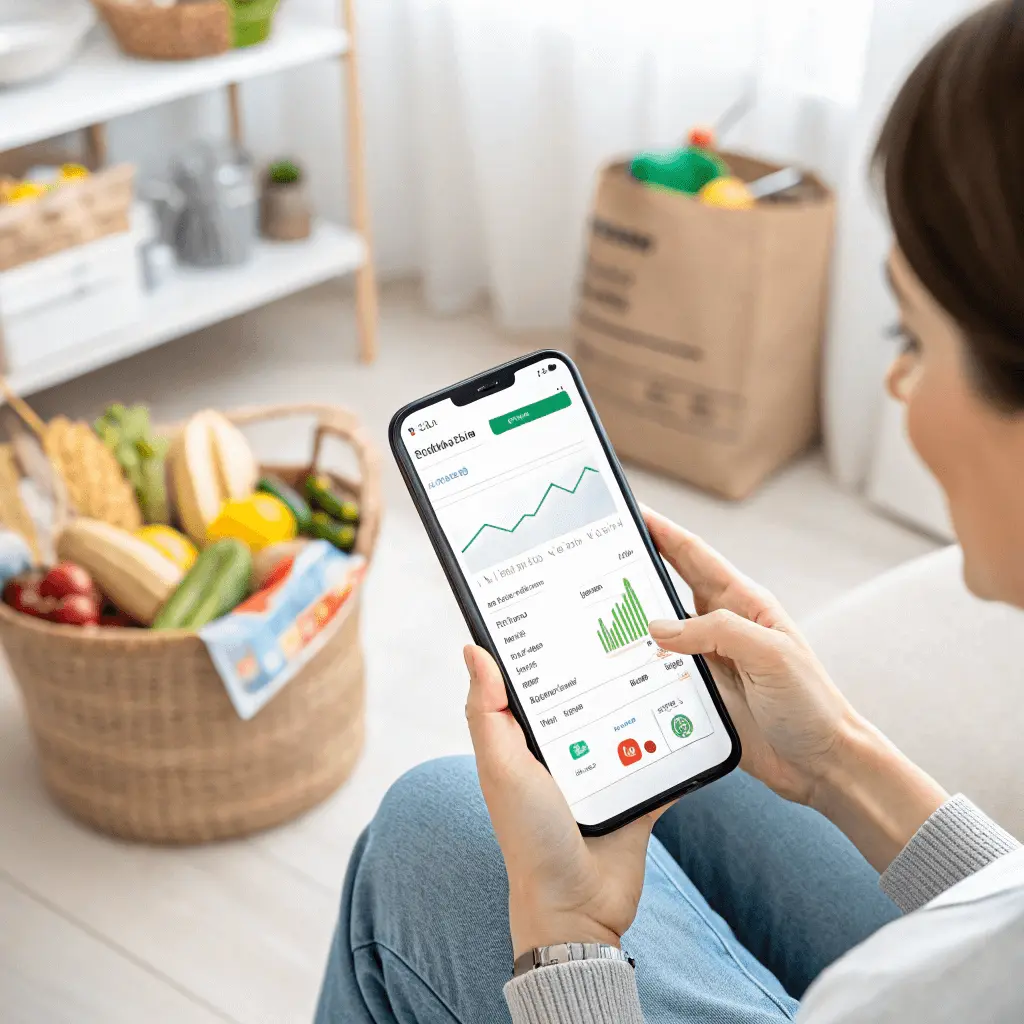
You walk into the grocery store, pick up the same carton of eggs you’ve bought for years, and notice something feels off. The price has ticked up by fifty cents. The next week, the box of cereal is slightly smaller, but the price is identical. This is the “invisible tax”—a combination of inflation and shrinkflation that slowly erodes your purchasing power. We call it silent inflation because it doesn’t happen all at once; it’s a death by a thousand cuts. However, while the economy might be working against you, technology is finally handing you the shield. By weaponizing price-tracking tools and dynamic budgeting apps, you can transform from a passive consumer into a tactical saver.
Phase I: Decoding the Stealth of Modern Pricing
To fight silent inflation, you first have to understand how it hides. Traditional inflation is easy to spot—a gallon of gas goes from $3.00 to $4.00. Silent inflation is more devious. It hides in “value-added” services, reduced package sizes, and dynamic pricing models that change based on your browsing history or the time of day.
Retailers now use sophisticated algorithms to adjust prices in real-time. If you aren’t using an algorithm of your own to track these changes, you are essentially bringing a knife to a gunfight. The goal of price-tracking technology is to pull back the curtain and see the “true” price of an item over time, rather than the arbitrary number on the shelf today.
Phase II: Weaponizing the “Paper Trail” of Data
The most effective way to beat the system is to use historical data. Most of us buy things when we need them, which is exactly when we have the least leverage. Price-tracking apps change the relationship by showing you the “price floor”—the lowest price an item has reached in the last year.
- Automated watchdogs: Tools that integrate with your browser can alert you the second a price drops on an item you’ve been eyeing. This allows you to “buy the dip” just like a Wall Street trader.
- The price protection loophole: Some apps scan your email receipts and automatically contact retailers for a refund if the price drops within a week of your purchase. This turns your inbox into a passive income stream.
- Crowdsourced savings: Certain platforms allow users to upload local prices, helping the community find the “neighborhood low” for essentials like milk or bread.
Phase III: The Move Toward Dynamic Budgeting
Static budgets—the kind your parents used with a checkbook or a simple spreadsheet—are failing in today’s economy. A static budget assumes the world stays the same for 30 days. In an uncertain economy, you need a dynamic budget that lives and breathes.
Modern budgeting apps now incorporate “gamified” elements to keep users engaged, mirroring the mechanics of high-intensity digital environments. For instance, the interface design and real-time feedback loops at Casino Runa are built to reward constant monitoring and quick decision-making. Budgeting apps are following this lead, using push notifications and “streak” rewards to encourage shoppers to track every cent. This crossover between entertainment psychology and financial utility proves that when we treat our savings like a strategic game, we are much more likely to stick to the plan. By making the “win” of saving money as visually satisfying as a digital payout, these apps help us stay disciplined against the siren song of impulse spending.
The Anatomy of a Living Budget
Unlike a traditional budget, a dynamic app categorizes your spending as it happens. If you spend too much on dining out on Tuesday, the app doesn’t just show a red bar; it automatically adjusts your “fun money” for the rest of the week. It forces you to make real-time trade-offs. This agility is the only way to stay ahead of silent inflation, as it allows you to see exactly where the “price creep” is eating into your savings before the month is over.
Phase IV: Overcoming the “Convenience” Tax
The biggest ally of silent inflation is our own desire for convenience. We pay a premium for one-click ordering and two-hour delivery. Price-tracking apps introduce “productive friction.” By forcing you to wait for a price alert or compare costs across three different retailers, the app gives your brain time to move from the impulsive “I want this” to the logical “Is this worth the price?”
Your inflation-proof toolkit:
- Browser extensions: Install at least two tools that automatically search for coupon codes and price histories. Never buy at the “list price” again.
- Zero-based budgeting apps: Use an app that gives every single dollar a job. If a dollar doesn’t have a job, it usually disappears into the pocket of a retailer through silent price hikes.
- Receipt aggregators: Use a secondary email address for all shopping. Let an app scan this “digital paper trail” to find hidden rebates or price-drop refunds.
- Unit price awareness: Inflation often hits the total price less than the “unit price” (price per ounce). Use apps that automatically calculate unit costs to see if that “Family Size” box is actually a rip-off.
Reclaiming Your Agency
The narrative of inflation often makes us feel like victims of large, abstract forces—central banks, global supply chains, and corporate greed. While those forces are real, they aren’t the whole story. You are not a powerless observer of your own bank account.
The real “win” in using these digital tools isn’t just the few hundred dollars you save each year on groceries or electronics. The real win is the shift in your mindset. You stop being a target for retailers and start being a hunter of value. By embracing dynamic budgeting and automated tracking, you are taking back the agency that silent inflation tries to steal. In a world where prices are constantly moving, your best defense isn’t a bigger paycheck—it’s a smarter system. You don’t have to wait for the economy to get better; you just have to get better at navigating it.
